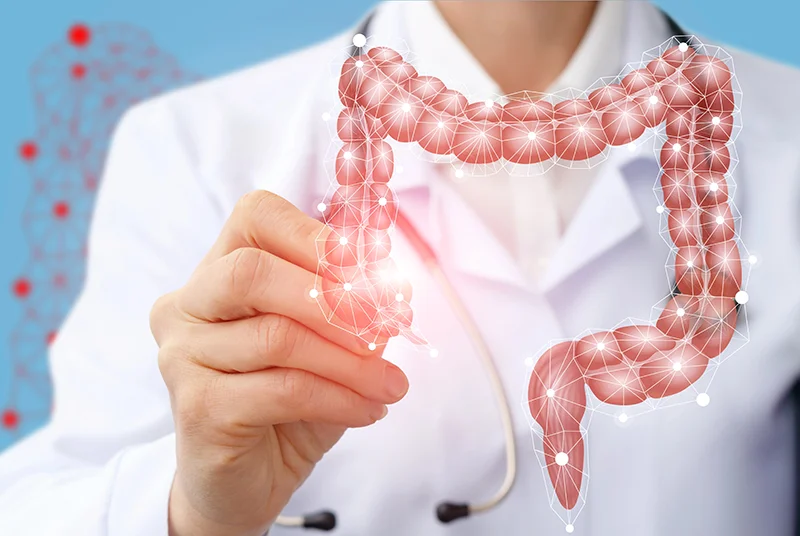
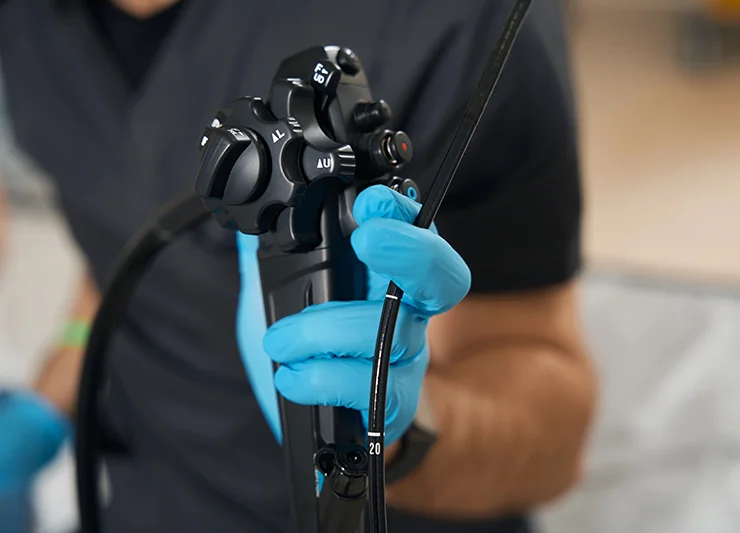
Digital chromoendoscopy is a method of analyzing the surface of the intestinal mucosa, thus making it possible to visualize lesions, e.g. precancerous lesions, not visible with conventional endoscopes.
Furthermore, colonoscopy is performed by insufflating carbon dioxide and not with atmospheric air. Carbon dioxide, unlike air, is absorbed and eliminated rapidly by the body; this makes the examination more tolerable, reduces the feeling of bloating after the examination, and also the possibility of intestinal perforation.
In case of sedation, the patient will be asked to recover in the specially designed area of the practice until the effects of the medications wear off. On the day of sedation, the patient is not allowed to drive.